
BMW recalls vehicles with defective seatbelts


Westwood, N.J. – Sept. 8, 2017 – BMW of North America has recalled dozens of vehicles possible equipped with defective seat belt assemblies, according to documentation filed with the National Highway Transportation Safety Administration. The campaign affects 2018 BMW 4 Series and M4 convertibles with production dates ranging from July 7, 2017 to July 25, 2017. The German automaker suspects 1 percent of the total vehicles named in the recall contain the damaged parts.

The Defect

Affected models are believed to include driver and passenger seat belt assemblies with defective Emergency Locking Retractors, the vehicle-sensitive mechanisms of which may fail due to incompatibility issues. This could inhibit ELR functionality and put occupants at risk during traffic accidents. However, BMW has yet to receive field reports connecting the defect to any accidents or injuries.

Timeline of Events

Engineers at an unspecified BMW assembly facility discovered the defect seat belt assemblies during a post-production test drive on July 17, 2017. These fixtures failed to perform up to standard during braking and cornering tests. BMW personnel examined the seat belts in the vehicle subjected to road testing and determined that its ELRs did not activate properly. The car company then shipped the defective features to the German ELR provider ZF TRW Automotive for internal analysis. Quality assurance staff at the parts manufacturer determined that the ELRs were the product of ineffective production processes. Specifically, assemblers had equipped with parts with incompatible vehicle-sensitive mechanism housings, which inhibited the operation of this feature.

After receiving these results, BMW conducted multiple investigations to determine how many vehicles had been fitted with the defective parts. With the information in hand, the vehicle manufacturer launched a voluntary safety recall on Aug. 7, 2017. BMW contacted owners nine days later.

On Aug. 25, BMW announced a delivery delay for approximately 1200 4 Series convertibles believed to include the problematic seat belt assembly, according to internal documentation submitted to the NHTSA.

The Solution

BMW has requested that dealers inspect the seat belt assemblies on affected vehicles and replace them if necessary, with no charge to the customer. The company is expected to notify owners Oct. 9, according to the NHTSA. However, those in need of more immediate assistance are encouraged to reach out to BMW customer service personnel at (800) 525-7417 or call the NHTSA Vehicle Safety Hotline at (888) 327-4236.
adminBMW recalls vehicles with defective seatbelts

Audi recalls vehicles with defective ECU software


Auburn Hills, Mich. – Sept. 8, 2017 – The Volkswagen Group of America has recalled more than 8,300 vehicles possibly equipped with defective engine control unit software, according to documentation filed with the National Highway Transportation Safety Administration. The campaign affects 2017-2018 Audi A3 cabriolets and sedans. The German automaker suspects all of the vehicles referenced in the recall contain the defective software.

The Defect

Affected models are equipped with problematic ECU software that facilitates an engine air and fuel mixture burning stability strategy, which is prone to cause stalling during start-up or low-RPM maneuvers. Specifically, when the engine flywheel begins to rotate, the software misinterprets this movement as “knocking,” which triggers engine shutoff. This poses a serious hazard to occupants, as vehicles could lose power when traveling at high speeds, therefore increasing the likelihood of an accident. That said, Audi has yet to receive reports linking the defect to any accidents or injuries.

In the event of an engine stall, the “Engine Stop While Driving” light will illuminate. Drivers can immediately restart their vehicles to regain operability.

Timeline of Events

Earlier this year, Audi began receiving internal reports outlining sudden engine shutoffs in new production vehicles. These documents described instances in which vehicles would stall when accelerating out of complete stops or slow rolls. Over the course of April and May 2017, the car company received multiple claims from owners. Claim volumes further increased during the summer months, the majority of which seemed to come from owners living in regions with high temperatures. Audi initiated an internal investigation in response to these filings, and discovered that virtually all of the claims originated from owners in cities with warm climates. It also found that the stalling behavior was a result of problematic ECU software.

On Aug. 9, quality assurance personnel at automaker decided to conduct a voluntary safety recall. Audi notified dealers of the action Sept. 6.

The Solution

The car company has directed dealers to replace the ECU software in affected vehicles free of charge, according to documents submitted to the NHTSA. Audi plans to notify owners Sept. 27. Those in need of more immediate assistance can contact Audi customer service staff at (800) 253-2834. Callers should use the internal recall reference identification code 24DF. Owners can also reach out to the NHTSA via the organization’s Vehicle Safety Hotline at (888) 327-4236.
adminAudi recalls vehicles with defective ECU software

Ford recalls vehicles with defective air bags

Ford Motor Company (NYSE:F) has recalled approximately 935 vehicles possibly equipped with defective Takata air bags, according to a company press release. The campaign includes 2017 Ford F-150 pickup trucks and 2017 Ford Mustang sports cars.

Recall Summary

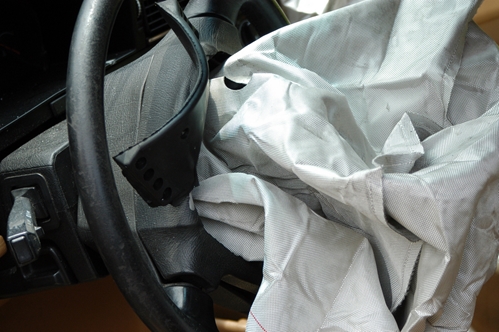
Affected vehicles could contain Takata-made front passenger air bag assemblies with inflators prone to rupturing during deployment, sending metal fragments passing through cabin areas.

These fixtures pose a serious danger to vehicle occupants and have been the subject of numerous safety recalls from more than one dozen car manufacturers, according to Car and Driver. Over 100 passengers have sustained injuries in accidents involving Takata air bags.

Around 650 vehicles in this recall originated from U.S. dealers, while 279 were sold in Canada and six in Mexico.

Is your vehicle part of the recall?

Around 650 vehicles were originally part of this recall in the United States. As of April 30, 2019, – the last date for which information was available – 554 airbags had been replaced. To see if your car still needs to be repaired, use MotorSafety’s free lookup tool.

Sean ReyesFord recalls vehicles with defective air bags

Ford recalls vehicles with defective air bags


Dearborn, Mich. – Sept. 5, 2017 – Ford Motor Company has recalled approximately 935 vehicles possibly equipped with defective Takata air bags, according to a company press release. The campaign affects 2017 Ford F-150 pickup trucks and Mustang sports cars with production dates ranging from July 20, 2017 to Aug. 1, 2017. An estimated 650 of the vehicles referenced in the recall originated from U.S. dealers, while 279 were sold in Canada and six in Mexico.

The Defect

Affected vehicles could contain Takata-made front passenger air bag assemblies with inflators prone to rupturing during deployment, sending metal fragments passing through cabin areas. These fixtures pose a serious danger to vehicle occupants and have been the subject of numerous safety recalls from more than one dozen car manufacturers, according to Car and Driver. Over 100 passengers have sustained injuries in accidents involving Takata air bags. At least two have died in such wrecks.

That said, Ford has yet to receive field reports linking any accidents or occupant injuries to the defective safety features referenced in this latest recall.

Timeline of Events

Ford did not release details into the investigation that resulted in the discovery of the defect.

The Solution

The automaker will direct dealers to replace the front passenger air bag assemblies in affected vehicles, free of charge. It has not publicized a timetable for dealer or owner notification. Owners in need of more immediate assistance can contact Ford customer service representatives at (800) 392-3673. Callers should use the recall reference identification code 17S26. Owners can also seek assistance from the National Highway Transportation Safety Administration via the organization’s toll-free Vehicle Safety Hotline at (888) 327-4236.

adminFord recalls vehicles with defective air bags

GM recalls trucks with defective EPS software [Video]

Hello, and welcome to another recall update.

General Motors has recalled more than 800,000 trucks believed to contain defective electronic power steering software, according to the National Highway Transportation Safety Administration. The campaign affects 2014 Chevrolet Silverado and GMC Sierra light-duty trucks.

The vehicles named in the recall could come equipped with EPS software that suddenly switches off during low-voltage conditions, resulting in the loss of power steering functionality. Investigators for GM looked into the issue between February and May, and eventually linked the problem to faulty coding. in June. the automaker launched an official recall, which has since been amended and expanded.

GM has ordered update the EPS software in affected vehicles, free of charge. However, the company has not yet released a timetable for owner notification. Stay tuned for more breaking recall news.

adminGM recalls trucks with defective EPS software [Video]

Mercedes-Benz recalls Smart vehicles with axle issues [Video]

Hello, and welcome to another recall update.

Mercedes-Benz USA has recalled more than 100 compact cars possibly equipped with defective left front axles, according to documentation filed with the National Highway Transportation Safety Administration. The campaign affects Smart brand 2017 Four-Two and Four-Two Cabriolet models.

The vehicles referenced in the recall could contain faulty left front axle steering knuckles, which are prone to fracture. Investigators conducted an internal audit earlier this year and discovered that improper casting processes caused the defect. Mercedes-Benz initiated an official safety recall in July following the close of the inquiry.

The automaker has requested dealers to replace the defective component, free of charge. Owners should expect to receive notification via first-class mail in September. Stay tuned for more breaking recall news.

adminMercedes-Benz recalls Smart vehicles with axle issues [Video]

Ford recalls sedans with noncompliant welds


Dearborn, Mich. – Sept. 1, 2017 – Ford Motor Company has recalled approximately 835 Focus sedans with noncompliant welds, according to an internal news release. The campaign affects 698 Focus models originating from U.S. dealerships, 132 sold in Canada and five in Mexico.

The Defect

The vehicles referenced in this recall have second-row seat-back frames with welds that do not effectively penetrate the space between the outboard pivot bracket and the pivot nut joint. This could reduce the structural integrity of the seat-back frame – particularly the pivot nut joint – and therefore put occupants at risk, especially in the event of an accident. Even so, Ford has not received reports linking the defect to any accidents or injuries.

Timeline of Events

Ford has yet to release details on the investigation that uncovered the defect.

The Solution

The automaker will direct dealers to replace the air bag assemblies in affected models, free of charge. However, Ford has not released a timetable for dealer or owner notification. Individuals in need of more immediate assistance can contact Ford customer service personnel at (800) 392-3673. Callers should use the recall identification code 17C13. Owners can also call the National Highway Transportation Administration Vehicle Safety Hotline at (888) 327-4236.

adminFord recalls sedans with noncompliant welds

GM recalls SUVs with defective drive shafts

Recall Masters -August 31, 2017

GM recalls SUVs with defective drive shafts

General Motors has recalled a number of sport utility vehicles believed to be equipped with defective drive shafts, according to documentation filed with the National Highway Transportation Safety Administration. The campaign affects 2017-2018 GMC Arcadia, 2018 GMC Terrain and 2018 Chevrolet Equinox models. The automaker estimates that 3 percent of the vehicles have problematic drive shafts.
The Defect
Models referenced in the recall could contain front right intermediate drive shaft assemblies prone to fracture and separation. Engineers have traced the issue to the parts manufacturer Nexteer, which failed to use properly calibrated ultrasonic scanning equipment when performing quality checks.
The defect poses a serious safety hazard to occupants, as vehicles with damaged drive shafts may lose power during operation or roll away when stopped without the parking brake engaged. However, GM has yet to receive reports of accidents or injuries connected to the defect…

Read the entire article on the Recall Masters website

Sean ReyesGM recalls SUVs with defective drive shafts

Mercedes recalls vehicles with outdated software


Atlanta – Aug. 31, 2017 – Mercedes Benz USA just recalled more than 12,000 vehicles possibly equipped with defective software, according to Consumer Affairs. The campaign pertains to 2016-2017 Mercedes AMG coupes and 2017 GLE 43 sport utility vehicles with manufacturing dates on or following May 2, 2017.

The Defect

The models named in the recall contain defective engine and transmission control software that could cause a complete engine shutdown. Specifically, the two software platforms interact improperly when drivers reduce to slow speeds by performing consecutive downshifts, Motor 1 reported. In this instance, the warning light illuminates and the vehicle’s engine shuts off. Mercedes has also discovered that the same outcome occurs when drivers start their vehicles in ECO mode.

The defective software increases the likelihood of an accident and therefore poses a serious risk to owners. However, Mercedes has yet to receive reports connecting the defect to any accidents of injuries due to how recently the issue was discovered.

Timeline of Events

The automaker has not released details into the investigation that uncovered the defect.

The Solution

Mercedes has asked dealers to reprogram the software in affected vehicles, free of charge. Owners should expect to receive notification in September. Those in need of more immediate assistance can contact Mercedes Benz USA customer service at (800) 367-6372, or call the National Highway Transportation Safety Administration Vehicle Safety Hotline at (888) 327-4236.

adminMercedes recalls vehicles with outdated software

BMW recalls vehicles with Takata air bags

Westwood, NJ – August 31, 2017 – BMW of North America has recalled more than 3,400 vehicles possibly equipped with defective Takata air bag inflators, according to documentation filed with the National Highway Transportation Safety Administration. The campaign, which amends an earlier action initiated in September 2016, includes the following models:

  • 2012-2013 X3 xDrive28i
  • 2012-2013 xDrive35i 

Recall summary

Affected models are believed to include Takata front driver-side air bag assemblies with inflator modules that are incorrectly welded and therefore prone to disconnection in the event of a crash. In such a scenario, metal air bag components could disperse with a high rate of speed throughout the cabin, potentially harming or killing occupants.

Car manufacturers across the globe have been dealing with this particular defect for more than two years, The New York Times reported. Safety officials attribute 17 deaths and hundreds of serious injuries to defective Takata air bags. However, BMW has yet to receive any reports connecting the air bag inflator modules in this latest recall to accidents of injuries.

On Sept. 20, 2016, BMW issued a safety recall with the NHTSA identification code 16V-683. Soon after, the automaker asked Takata to initiate an internal investigation aimed at reviewing air bag module installation records across all production sites. BMW requested this action after reviewing additional field reports and recovered parts. On July 20, 2017, Takata shared the preliminary results of this investigation, which indicated that two more air bag modules produced by the company could potentially harm passengers. Eleven days later, the parts manufacturer recommended that BMW issue a safety recall to correct the potentially defective parts.

BMW analyzed its production logs and pinpointed models containing the air bag inflator modules mentioned in the Takata report. On Aug. 2, 2017, safety officials for the British automaker decided to launch a voluntary recall action. BMW notified dealers of the action Aug. 8.

The repair

The car manufacturer has ordered dealers to replace the front driver-side air bag assemblies in the affected vehicles free of charge, according to NHTSA documents. BMW intends to notify owners via first-class mail on or around Oct. 2.

Is your vehicle part of the recall?

Over 3,400 vehicles were originally part of this recall. Since then, the recall population has grown to 6,785. As of April 23, 2019 – the last date information was available – 4,807 airbags had been replaced. To see if your car still needs to be repaired, use MotorSafety’s free lookup tool.

Note: June 24, 2021

We have noticed a large number of readers are interested in this recall. For that reason, we have added the last section where drivers can check if their vehicle is part of this recall and included the recall completion rate. The article has also been updated to reflect the latest editorial standards.

adminBMW recalls vehicles with Takata air bags