
Ford recalls vehicles with defective steering assemblies


Dearborn, Mich. – Sept. 19, 2017 – Ford Motor Company has recalled more than 250 vehicles possibly equipped with defective steering gear heat fasteners, according to documentation submitted to the National Highway Transportation Safety Administration. The campaign affects 2017 Explorer sport utility vehicles and Taurus sedans, as well as Police Interceptor sedans and utility vehicles. Ford estimates that 80 percent of the vehicles referenced in the recall contain the defective features.

The Defect

Affected vehicles likely contain steering-gear heat fasteners that have not been properly coated with a corrosion-resistant finish. As a result, moisture may corrode these and other nearby metal fixtures, possibly leading the heat shield to detach completely from the steering gear. This may expose the steering gear assembly to higher than expected temperatures, which triggers thermal protection mode. In this scenario, steering assist functionality decreases while the gears cool. While not overtly dangerous, this situation could affect vehicle maneuverability and increase the likelihood of an accident. However, Ford has not received any field reports connecting the defective heat fasteners to any injuries of accidents.

Drivers operating vehicles with defective heat gear fasteners that have caused steering-gear overheating and activated thermal protection mode will hear audible chimes and see an engine warning on the dash cluster.

Timeline of Events

In May 2017, a worker at the ITW Shakeproof Group, Ford’s steering-gear module supplier, noticed that the gear heat fasteners on one assembly approved for shipment happened to be black in color. The employee reported the issue to his superiors who notified Ford. The automaker’s plant on Chicago, which was responsible for producing the vehicles equipped with steering gear modules from the Shakeproof Group, stopped shipments immediately. Engineers at the facility then launched an investigation.

Ford determined that the supplier had sent over steering-gear modules with the wrong fasteners, which were not properly coated to protect against corrosion. The car manufacturer brought this evidence in front of the Critical Concern Review Group on May 23.

Over the course of June and July, personnel from the engineering department analyzed the black fasteners to see if they succeeded in retaining vehicle heat shields. Ford also began reviewing plant assembly and shipment records to determine if vehicles had left the facility with the steering gear modules featuring these fixtures installed.

In August, the Ford Field Review Committee examined both reports from the engineering team, as well as the production and shipment logs for the Chicago assembly site. On Aug. 21, the group concluded that a voluntary safety recall was necessary. The automaker informed dealers of the recall action Aug. 29.

The Solution

Ford has directed dealers to replace black steering-gear heat fasteners in affected models with properly coated models, free of charge. The car company began notifying owners via first-class mail Sept. 11. Those in need of more assistance can contact Ford customer service at (866) 436-7332 using the recall identification code 17S23, according to a recall notification letter from the NHTSA. Owners can also connect directly with the NHTSA via the agency’s Vehicle Safety Hotline at (888) 327-4236.


adminFord recalls vehicles with defective steering assemblies

Honda issues recall for defective air bag assemblies


Torrance, Calif. – Sept. 18, 2017 – American Honda Motor Company has recalled approximately 646 vehicles believed to be equipped with defective replacement air bag inflators, according to documents filed with the National Highway Transportation Safety Administration. The recall affects numerous Honda models, including:

  • 2008-2012 Honda Accord sedans with production dates ranging from July 20, 2007 to Aug. 21, 2012.
  • 2010-2012 Honda Accord Crosstour crossovers with production dates ranging from Dec. 4, 2009 to May 30, 2012.
  • 2006-2011 Honda Civic sedans with production dates ranging from Sept. 12, 2005 to March 16, 2011.
  • 2007-2011 Honda CR-V sport utility vehicles with production dates ranging from Aug. 2, 2006 to Nov. 15, 2011.
  • 2009-2012 Honda Fit hatchbacks with production dates ranging from Nov. 12, 2008 to May 9, 2012.
  • 2010-2012 Honda Insight compact hybrid sedans with production dates ranging from Feb. 20, 2009 to Dec. 20, 2011.
  • 2009-2012 Honda Pilot sport utility vehicles with production dates ranging from May 19, 2008 to Aug. 27, 2012.

The Japanese automaker is unsure what percentage of the vehicles named in the campaign contain the defective parts.

The Defect

Affected models could contain frontal air bag inflators that were damaged during installation and therefore may not deploy properly in the event of an accident, according to an internal service bulletin submitted to the NHTSA. This poses a serious hazard to passengers. However, Honda has not received field reports linking the defective air bag inflators to any accidents or injuries thus far.

Timeline of Events

On Aug. 7, 2017, an American dealer notified Honda that technicians had incorrectly installed replacement air bag inflators in vehicles involved in an earlier recall related to Takata air bag assemblies. Staff for the automaker began investigating the report immediately and requested further details from the dealership employees who executed the air bag inflator installation. This inquiry unfolded over the course of eight days.

On Aug. 28, Honda officials reviewed all evidence gathered during the investigation and determined that the improperly installed features posed a serious safety risk to occupants. The car manufacturer then ordered a voluntary safety recall. Honda notified dealers Aug. 31.

The Solution

The automaker has directed dealers to replace the frontal air bag inflators in affected vehicles free of charge, according to a recall acknowledgment document. Honda intends to notify owners via first-class mail Oct. 1. Those in need of more immediate assistance can contact Honda customer service at (888) 234-2138. Callers should use one of the following recall identification codes: O07, Y0A, N06, G05, M04, Y01 and O09. Owners can also contact the NHTSA directly using the agency’s Vehicle Safety Hotline at (888) 327-4236.
adminHonda issues recall for defective air bag assemblies

Ford recalls trucks with defective inflatable seat belt assemblies


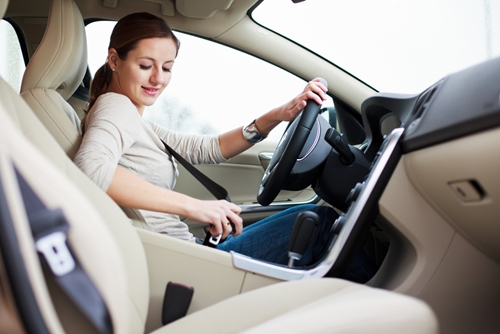
Dearborn, Mich. – Sept. 13, 2017 – Ford Motor Company has recalled more than 117,000 trucks believed to contain defective inflatable seat belt buckle assemblies, according to documentation filed with the National Highway Transportation Safety Administration. The campaign affects 2015-2017 Ford F-150 Crew Cab trucks with production dates ranging from July 20, 2015 to June 16, 2017, as well as 2017 F-250 and F-350 Super Duty Crew Cab trucks produced between Oct. 20, 2015 and June 16, 2017. Ford estimates that 15 percent of the vehicles named in the recall have the defective feature.

The recall involves 143,000 vehicles worldwide, including 117,423 originating from American dealers; 15,175 from sellers in Canada and 8,202 from those in Mexico, according to a company press release.

The Defect

The vehicles involved in the campaign come with inflatable seat belt buckle assemblies attached to left rear passenger seats with defective mounting brackets. Specifically, these steel fixtures do not meet the rivet head thickness standards established in Section 5.2, rule 210 of the Federal Motor Vehicle Safety Standards, which states that seat belt anchoring devices must “ensure proper location for effective occupant restraint and to reduce the likelihood of failure,” according to the NHTSA.

The defective part could put passengers at risk, especially during crashes. However, Ford has yet to receive reports connecting the problematic fixture to any accidents or injuries.

Timeline of Events

In June 2017, seat belt bracket supplier Takata notified Ford of an incident in which an inflatable seat belt feature separated from its underlying support. Members of the Ford Critical Concern Review Group stepped in to investigate the report, while engineers from Takata analyzed manufacturing records, eventually coming to the conclusion that shop-floor personnel had made unauthorized changes to the rivet head thickness measurements. This resulted in the production and application of ineffective rivets, making seat belt anchor brackets prone to separation. Takata released these results to Ford in early August.

On Aug. 21, Ford’s Field Review Committee reviewed this data and approved a voluntary safety recall. The car company notified dealers Aug. 29.

The Solution

Ford has directed dealers to inspect the seat belt assemblies on affected vehicles and add additional rivets if necessary, according to a recall acknowledgment document from the NHTSA. Dealers are to make these repairs free of charge. Ford is expected to contact owners via first-class mail Oct. 16. However, those in need of more immediate assistance can call Ford customer service at (866) 436-7332. Callers should use the internal recall identification code 17C12. Owners can also receive assistance directly from the NHTSA through its Vehicle Safety Hotline at (888) 327-4236.
adminFord recalls trucks with defective inflatable seat belt assemblies

Ford recalls sedans with defective seat assemblies


Dearborn, Mich. – Sept. 13, 2017 – Ford Motor Company has recalled nearly 700 vehicles believed to be equipped with defective seat assemblies, according to documentation from the National Highway Transportation Safety Administration. The campaign affects 2017 Ford Focus sedans with production dates ranging from June 7, 2017 to June 12, 2017. Ford estimates that 1 percent of the vehicles referenced in the action contain the defective parts.

In addition to the 698 Ford Focuses recalled in the U.S., the automaker is recalling 132 sold in the Canadian market and five originating from Mexican dealers, according to a company press release.

The Defect

The vehicles named in the campaign could come equipped with second-row backseat frames that have not been sufficiently welded. Specifically, assembly crews may have failed to achieve proper weld penetration between the outboard pivot bracket and the pivot nut joint. The defect could increase the likelihood of passenger injury during accidents, as the seat back may come loose. However, Ford has yet to receive reports connecting the defect to any accidents or injuries.

The improper welds violate Federal Motor Vehicle Safety Standards 207 and 210, which dictate that automakers produce vehicles with safe seat belt anchorage and seating systems.

Timeline of Events

In June 2017, Ford personnel at the company’s Michigan Assembly Plant in Wayne came across a vehicle whose left rear seat back frame outboard pivot nut separated during the installation of the back seat. The plant returned the seat back frame to Ford’s tier-one supplier, which determined that the tier-two supplier had failed to apply proper welds. The tier-two supplier investigated the issue throughout July and August, eventually coming to the conclusion that the pivot nuts installed on the Ford seat back frames had become dislodged immediately prior to welding. The parts provider determined that a sticking condition had caused the pivot nuts to move.

Ford performed additional analyses and found that the defective welds put the vehicle in violation of FMVSS guidelines. On Aug. 21, the Ford Field Review Committee chose to conduct a voluntary recall. The automaker notified dealers Aug. 29.

The Solution

Ford has directed dealers to inspect the welds on affected vehicles and replace the seat back frames if necessary. These repairs are to be performed free of charge. Ford plans to notify owners via first-class mail between Oct. 16 and Oct. 20. Those in need of more immediate assistance can contact Ford customer service at (866) 436-7332 or reach to the NHTSA via its Vehicle Safety Hotline at (888) 327-4236.

adminFord recalls sedans with defective seat assemblies

Toyota recalls SUVs with defective roof accessories

Recall Masters -September 12, 2017

Toyota recalls SUVs with defective roof accessories

Gulf States Toyota, the second-largest distributor of Toyota vehicles worldwide, has recalled more than 1,100 sport utility vehicles possibly equipped with defective roof rail accessories, according to documentation filed with the National Highway Transportation Safety Administration. The campaign affects 2017 Toyota Highlander and Highlander Hybrid models with production dates ranging from Nov. 16, 2016 to July 19, 2017. The car company suspects 100 percent of the vehicles referenced in the recall contain the defective part.
The Defect
The models named in the recall are equipped with roof rail cross bars with fasteners that were not tightened properly during the installation process, which took place at GST headquarters. Consequently, the fasteners could become loose during operation, possibly leading to complete cross-bar detachment. This poses a serious safety risk to owners. However, the GST has yet to receive reports detailing instances of detachment or linking the defective accessory to accidents or injuries…

Read the entire article on the Recall Masters website

Sean ReyesToyota recalls SUVs with defective roof accessories

Toyota recalls SUVs with defective roof accessories


Houston – Sept. 12, 2017 – Gulf States Toyota, the second-largest distributor of Toyota vehicles worldwide, has recalled more than 1,100 sport utility vehicles possibly equipped with defective roof rail accessories, according to documentation filed with the National Highway Transportation Safety Administration. The campaign affects 2017 Toyota Highlander and Highlander Hybrid models with production dates ranging from Nov. 16, 2016 to July 19, 2017. The car company suspects 100 percent of the vehicles referenced in the recall contain the defective part.

The Defect

The models named in the recall are equipped with roof rail cross bars with fasteners that were not tightened properly during the installation process, which took place at GST headquarters. Consequently, the fasteners could become loose during operation, possibly leading to complete cross-bar detachment. This poses a serious safety risk to owners. However, the GST has yet to receive reports detailing instances of detachment or linking the defective accessory to accidents or injuries.

Timeline of Events

Quality assurance personnel for GST recently reviewed the structural integrity of cross-bar assemblies attached to 2017 Toyota Highlander SUVs. These inspections revealed that cross-bar fasteners had not been properly torqued during installation. GST personnel then inspected production records and torque value notations, some of which appeared to be missing. This prompted the Toyota distributor to launch an official safety recall.

GST notified associated dealers Aug. 30.

The Solution

GST has directed dealers to inspect the roof cross bars on affected vehicles and torque the fasteners if necessary, according to a recall acknowledgment document from the NHTSA. Dealers are to perform these repairs free of charge. GST plans to contact owners Sept. 25. Those in need of more immediate assistance can contact company customer service personnel at (800) 444-1074 or call the NHTSA Vehicle Safety Hotline at (888) 327-4236.

adminToyota recalls SUVs with defective roof accessories

Audi recalls vehicles with defective ECU software

Recall Masters -September 8, 2017

Audi recalls vehicles with defective ECU software

The Volkswagen Group of America has recalled more than 8,300 vehicles possibly equipped with defective engine control unit software, according to documentation filed with the National Highway Transportation Safety Administration. The campaign affects 2017-2018 Audi A3 cabriolets and sedans. The German automaker suspects all of the vehicles referenced in the recall contain the defective software.
The Defect
Affected models are equipped with problematic ECU software that facilitates an engine air and fuel mixture burning stability strategy, which is prone to cause stalling during start-up or low-RPM maneuvers. Specifically, when the engine flywheel begins to rotate, the software misinterprets this movement as “knocking,” which triggers engine shutoff. This poses a serious hazard to occupants, as vehicles could lose power when traveling at high speeds, therefore increasing the likelihood of an accident. That said, Audi has yet to receive reports linking the defect to any accidents or injuries…

Read the entire article on the Recall Masters website

Sean ReyesAudi recalls vehicles with defective ECU software

BMW recalls vehicles with defective seatbelts

Recall Masters -September 8, 2017

BMW recalls vehicles with defective seatbelts

BMW of North America has recalled dozens of vehicles possible equipped with defective seat belt assemblies, according to documentation filed with the National Highway Transportation Safety Administration. The campaign affects 2018 BMW 4 Series and M4 convertibles with production dates ranging from July 7, 2017 to July 25, 2017. The German automaker suspects 1 percent of the total vehicles named in the recall contain the damaged parts.
The Defect
Affected models are believed to include driver and passenger seat belt assemblies with defective Emergency Locking Retractors, the vehicle-sensitive mechanisms of which may fail due to incompatibility issues. This could inhibit ELR functionality and put occupants at risk during traffic accidents. However, BMW has yet to receive field reports connecting the defect to any accidents or injuries…

Read the entire article on the Recall Masters website

Sean ReyesBMW recalls vehicles with defective seatbelts

BMW recalls vehicles with defective seatbelts


Westwood, N.J. – Sept. 8, 2017 – BMW of North America has recalled dozens of vehicles possible equipped with defective seat belt assemblies, according to documentation filed with the National Highway Transportation Safety Administration. The campaign affects 2018 BMW 4 Series and M4 convertibles with production dates ranging from July 7, 2017 to July 25, 2017. The German automaker suspects 1 percent of the total vehicles named in the recall contain the damaged parts.

The Defect

Affected models are believed to include driver and passenger seat belt assemblies with defective Emergency Locking Retractors, the vehicle-sensitive mechanisms of which may fail due to incompatibility issues. This could inhibit ELR functionality and put occupants at risk during traffic accidents. However, BMW has yet to receive field reports connecting the defect to any accidents or injuries.

Timeline of Events

Engineers at an unspecified BMW assembly facility discovered the defect seat belt assemblies during a post-production test drive on July 17, 2017. These fixtures failed to perform up to standard during braking and cornering tests. BMW personnel examined the seat belts in the vehicle subjected to road testing and determined that its ELRs did not activate properly. The car company then shipped the defective features to the German ELR provider ZF TRW Automotive for internal analysis. Quality assurance staff at the parts manufacturer determined that the ELRs were the product of ineffective production processes. Specifically, assemblers had equipped with parts with incompatible vehicle-sensitive mechanism housings, which inhibited the operation of this feature.

After receiving these results, BMW conducted multiple investigations to determine how many vehicles had been fitted with the defective parts. With the information in hand, the vehicle manufacturer launched a voluntary safety recall on Aug. 7, 2017. BMW contacted owners nine days later.

On Aug. 25, BMW announced a delivery delay for approximately 1200 4 Series convertibles believed to include the problematic seat belt assembly, according to internal documentation submitted to the NHTSA.

The Solution

BMW has requested that dealers inspect the seat belt assemblies on affected vehicles and replace them if necessary, with no charge to the customer. The company is expected to notify owners Oct. 9, according to the NHTSA. However, those in need of more immediate assistance are encouraged to reach out to BMW customer service personnel at (800) 525-7417 or call the NHTSA Vehicle Safety Hotline at (888) 327-4236.

adminBMW recalls vehicles with defective seatbelts

Audi recalls vehicles with defective ECU software


Auburn Hills, Mich. – Sept. 8, 2017 – The Volkswagen Group of America has recalled more than 8,300 vehicles possibly equipped with defective engine control unit software, according to documentation filed with the National Highway Transportation Safety Administration. The campaign affects 2017-2018 Audi A3 cabriolets and sedans. The German automaker suspects all of the vehicles referenced in the recall contain the defective software.

The Defect

Affected models are equipped with problematic ECU software that facilitates an engine air and fuel mixture burning stability strategy, which is prone to cause stalling during start-up or low-RPM maneuvers. Specifically, when the engine flywheel begins to rotate, the software misinterprets this movement as “knocking,” which triggers engine shutoff. This poses a serious hazard to occupants, as vehicles could lose power when traveling at high speeds, therefore increasing the likelihood of an accident. That said, Audi has yet to receive reports linking the defect to any accidents or injuries.

In the event of an engine stall, the “Engine Stop While Driving” light will illuminate. Drivers can immediately restart their vehicles to regain operability.

Timeline of Events

Earlier this year, Audi began receiving internal reports outlining sudden engine shutoffs in new production vehicles. These documents described instances in which vehicles would stall when accelerating out of complete stops or slow rolls. Over the course of April and May 2017, the car company received multiple claims from owners. Claim volumes further increased during the summer months, the majority of which seemed to come from owners living in regions with high temperatures. Audi initiated an internal investigation in response to these filings, and discovered that virtually all of the claims originated from owners in cities with warm climates. It also found that the stalling behavior was a result of problematic ECU software.

On Aug. 9, quality assurance personnel at automaker decided to conduct a voluntary safety recall. Audi notified dealers of the action Sept. 6.

The Solution

The car company has directed dealers to replace the ECU software in affected vehicles free of charge, according to documents submitted to the NHTSA. Audi plans to notify owners Sept. 27. Those in need of more immediate assistance can contact Audi customer service staff at (800) 253-2834. Callers should use the internal recall reference identification code 24DF. Owners can also reach out to the NHTSA via the organization’s Vehicle Safety Hotline at (888) 327-4236.

adminAudi recalls vehicles with defective ECU software